


AI in medical research is helping scientists work with datasets that are too large or complex to examine efficiently using manual methods alone. Researchers can use machine learning to identify patterns, compare biological information, organize evidence, and explore possible relationships between diseases and treatments.
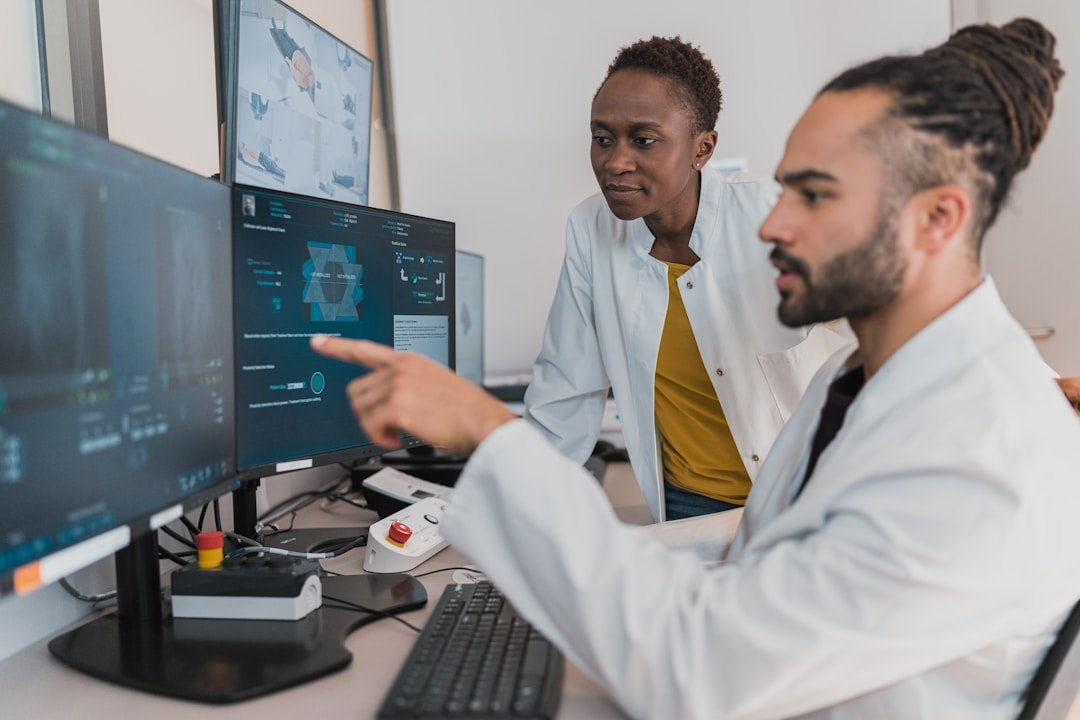
From universities and hospitals to biotechnology companies, these tools are becoming part of a broader research ecosystem. The technology is relevant to researchers in North America, Europe, Asia, Australia, and other regions working to improve health outcomes.
How Researchers Use AI
Finding patterns in large datasets
Research projects can combine clinical records, genetic information, imaging, laboratory measurements, and published studies. AI can help classify and analyze these datasets, allowing researchers to focus on questions that deserve deeper investigation.
Drug discovery
AI can help researchers screen potential compounds and predict useful properties. These predictions can narrow the field for laboratory testing, although promising computer results still require experimental validation.
Studying disease mechanisms
Machine learning can reveal relationships between biological variables that may be difficult to identify with conventional analysis. Researchers can then design experiments to test whether those relationships are meaningful.
Improving research workflows
AI can assist with literature discovery, data organization, coding, documentation, and other repetitive tasks. This can reduce friction throughout a research project.
Why Validation Matters
A prediction is not proof. Research AI must be tested against reliable data and evaluated for errors, bias, reproducibility, and performance across different populations. Findings that look promising computationally still need appropriate laboratory, clinical, or statistical validation.
Global Opportunities
AI can help researchers collaborate across borders by making large collections of information easier to search and analyze. However, international projects also need clear rules for privacy, data access, consent, security, and responsible sharing.
The Next Stage
As computing and biomedical datasets improve, AI in medical research could make parts of discovery faster and more targeted. The biggest gains will come when AI tools are combined with strong scientific methods and expert human judgment.
Final Thoughts
Artificial intelligence is becoming a powerful research assistant. It can accelerate exploration, but scientific progress still depends on careful experiments, transparent methods, and evidence that can withstand independent review.
Practical Questions to Ask About AI in medical research
Research teams should treat AI as an accelerator for scientific work, not a substitute for scientific method. A useful model can help identify patterns or prioritize experiments, but researchers still need reproducible methods, appropriate controls, and independent validation. This is especially important when a computational result could influence clinical development.
Strong research workflows also document where data came from, how it was processed, what assumptions were made, and how model performance was evaluated. These practices make findings easier to reproduce and help other scientists understand the limits of a result.
Global collaboration
AI can help research teams work across large datasets and international collaborations, but data governance, consent, privacy, intellectual property, and equitable access remain important. Responsible systems should create scientific value without weakening public trust.
Frequently Asked Questions
Can AI discover new medicines?
AI can help researchers identify and prioritize promising candidates, but laboratory studies and clinical trials are still necessary.
Does AI replace scientists?
No. Researchers define questions, interpret evidence, design experiments, and decide whether a result is scientifically meaningful.
Why is validation important?
A model can find patterns that do not generalize. Independent testing helps determine whether a finding is reliable.
Further Reading
Explore our article on AI in healthcare and consult WHO guidance on responsible health AI.