


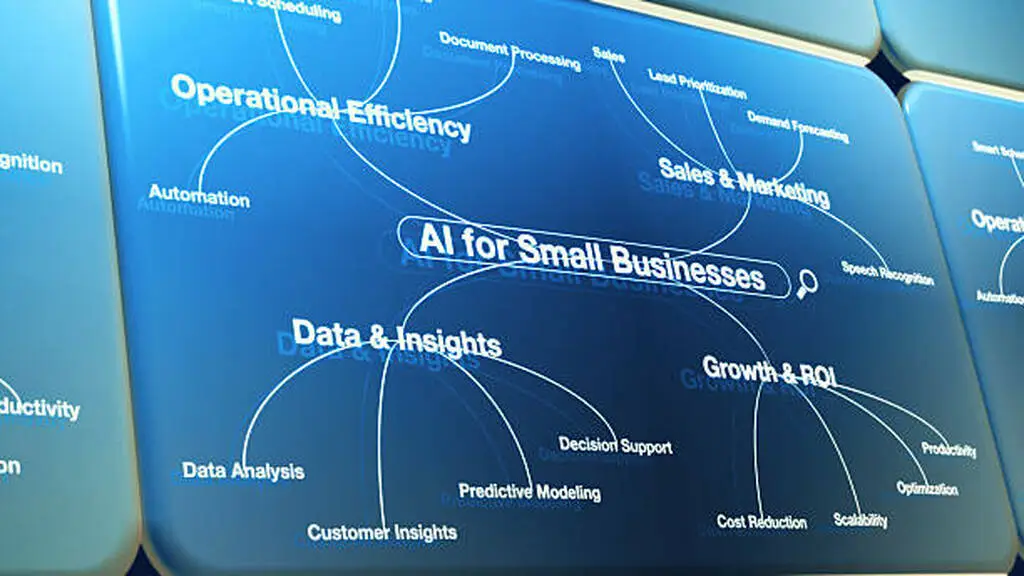
AI for small businesses is no longer limited to large technology companies with dedicated research teams and expensive software. Small businesses, freelancers, agencies, retailers, consultants, and local service providers can use artificial intelligence to reduce repetitive work, organize information, improve productivity, and create better customer experiences.
Whether a business operates in the United States, United Kingdom, Canada, Australia, Pakistan, India, Europe, or another market, the best way to start is usually with one simple workflow and a clearly defined business goal.
The purpose of using AI is not to automate everything. Instead, businesses can use AI where it provides genuine value while keeping people involved in important decisions.
Where Small Businesses Can Use AI
There are many practical AI use cases for small businesses. AI tools can assist with routine tasks that would otherwise take employees or business owners considerable time.
For example, AI can help businesses:
- Create first drafts of marketing content
- Summarize customer feedback
- Organize research
- Prepare meeting notes
- Classify customer inquiries
- Generate social media ideas
- Draft email campaigns
- Analyze spreadsheets
- Organize unstructured information
- Create checklists and workflow documents
These applications can help small teams spend less time on repetitive administrative work and more time on customers, strategy, and business growth.
AI for Customer Service
Customer service is one of the most practical areas for AI in small businesses. AI can help organize support requests, draft responses to frequently asked questions, and suggest relevant information for customer service representatives.
For example, an AI system could help a team identify whether an inquiry is about pricing, delivery, technical support, or a general question. A human representative can then review the information and provide the final response.
Human oversight remains important for sensitive complaints, unusual situations, refunds, legal issues, account problems, and other cases where context matters.
The goal should be to make customer service more efficient without making customers feel that they cannot reach a real person when they need one.
AI for Marketing and Content
Marketing is another area where AI can help small businesses save time. AI tools can assist with brainstorming, content outlines, product descriptions, email drafts, social media ideas, and other repetitive creative tasks.
However, effective marketing still requires a strong understanding of the target audience.
Businesses should add:
- Real customer insights
- Accurate product or service information
- Local market knowledge
- Original examples
- Brand-specific language
- Human editing and review
Publishing generic AI-generated content without checking its accuracy can weaken a brand rather than strengthen it.
AI works best as a creative assistant that helps a business get started faster while people remain responsible for quality, accuracy, and the final message.
AI for Research and Business Planning
Small businesses often need to research competitors, customers, markets, products, and business opportunities. AI can help structure this work.
For example, a business owner can use AI to:
- Create research questions
- Summarize lengthy documents
- Organize notes
- Compare business ideas
- Generate planning frameworks
- Identify topics that require further research
- Turn unstructured information into a structured plan
However, AI-generated information should not automatically be considered accurate.
Important market statistics, regulations, prices, competitor claims, industry requirements, and other business-critical information should be independently verified using reliable and authoritative sources.
AI for Productivity and Repetitive Tasks
For many small businesses, the biggest immediate benefit of AI may simply be saving time.
Business owners and small teams often handle many repetitive activities, including writing routine emails, summarizing meetings, organizing notes, creating checklists, and preparing basic documents.
AI can assist with these tasks and provide a starting point that a person can review and improve.
Even saving a few minutes on several recurring tasks can add up over time. The key is to identify workflows where AI can reliably support employees rather than introducing unnecessary complexity.
AI for Businesses in Different Markets
The best AI strategy for small businesses depends on the market, customers, industry, and available resources.
A company in the United States may prioritize customer automation, productivity, and data analysis. A small business in Pakistan or India may place greater value on multilingual communication, affordable tools, and efficient content creation.
European organizations may need to pay particular attention to privacy, data handling, and regulatory requirements. Businesses in Canada and Australia also operate within their own legal, industry, and consumer environments.
This means there is no single AI strategy that works for every small business.
Local regulations, customer expectations, language, industry requirements, and data-protection considerations should all be evaluated before introducing an AI workflow.
What Small Businesses Should Not Automate Blindly
AI can be useful, but automation should not be adopted simply because a task can technically be automated.
Businesses should use extra caution with decisions involving:
- Hiring and employment
- Credit or financial eligibility
- Sensitive customer information
- Legal compliance
- Health or safety
- Employee discipline
- Security
- High-impact customer decisions
Automating a high-impact decision without proper oversight can create risks that outweigh the time saved.
Human review should remain part of workflows where decisions can significantly affect customers, employees, finances, or legal obligations.
A Simple AI Adoption Plan for Small Businesses
Small businesses do not need a large AI strategy to get started. A simple, measured approach can be more effective.
1. Choose One Repetitive Task
Start with a task that occurs frequently and has a clear process.
2. Define What Success Looks Like
Decide whether the goal is to save time, improve response quality, organize information, reduce errors, or improve another measurable outcome.
3. Select a Trustworthy AI Tool
Choose a tool that fits the business requirement and consider its privacy, security, reliability, and cost before using it.
4. Create a Human Review Process
Decide what AI can produce independently and what must be reviewed or approved by a person.
5. Measure Time and Quality
Compare the new workflow with the previous process. Track whether AI actually saves time while maintaining or improving quality.
6. Expand Gradually
If the workflow performs reliably, consider applying the same approach to another suitable task.
This gradual approach can help businesses avoid investing heavily in automation before they understand its practical value.
Protect Business Data When Using AI
Data protection is an important part of using AI for small businesses.
Before entering information into an AI service, businesses should understand how the service handles data, where information is stored, and who may have access to it.
Avoid entering sensitive information such as:
- Passwords
- Private customer records
- Confidential contracts
- Financial information
- Personal identification details
- Proprietary business information
- Sensitive employee records
Businesses should establish clear internal guidelines for AI use and ensure employees understand what information can and cannot be shared with AI systems.
Benefits of AI for Small Businesses
When implemented carefully, AI can provide several potential benefits for small teams.
These include:
- Saving time on repetitive tasks
- Improving workflow organization
- Supporting customer service
- Speeding up content creation
- Helping with research
- Improving access to information
- Supporting multilingual communication
- Giving small teams additional productivity capabilities
The benefits depend on how the technology is implemented. A poorly designed automated workflow can create more work, while a well-designed workflow can remove unnecessary steps.
Common Mistakes to Avoid
Small businesses should avoid treating AI as a replacement for human expertise.
Common mistakes include:
- Automating everything at once
- Publishing unverified AI-generated information
- Sharing confidential data without safeguards
- Removing human review from important decisions
- Choosing tools without considering privacy
- Measuring automation only by speed
- Using AI without a clearly defined business goal
A successful AI workflow should improve a real business process rather than simply add another piece of software.
The Opportunity for Small Teams
AI for small businesses can provide access to capabilities that previously required additional staff, specialized software, or significant amounts of time.
But technology alone is not the competitive advantage.
The real opportunity comes from combining AI with human expertise, accurate information, strong customer relationships, and well-designed workflows. A small team that uses AI thoughtfully can reduce repetitive work while continuing to provide the personal service and judgment that customers value.
The best approach is simple: start with one useful task, measure the results, protect business data, maintain human oversight, and expand only when the workflow proves reliable.
Frequently Asked Questions About AI for Small Businesses
How can AI help a small business?
AI can help small businesses with customer service, marketing, research, content creation, organization, data analysis, and repetitive administrative tasks. It can save time and support employees when used appropriately.
What are the best uses of AI for small businesses?
Common uses include drafting routine communications, organizing information, summarizing documents, generating marketing ideas, preparing meeting notes, and supporting customer service workflows.
Can small businesses afford AI tools?
Many AI services offer different pricing levels, including options designed for individuals and small teams. Businesses should compare the cost of a tool with the time and value it can realistically provide.
Should small businesses automate customer service with AI?
AI can assist with routine customer service tasks, such as categorizing inquiries or drafting responses. Human representatives should remain available for sensitive, complex, unusual, or high-impact situations.
Is AI safe for business data?
AI safety depends on the specific service, its data practices, the information being shared, and the safeguards used by the business. Companies should understand how a tool handles information and avoid sharing confidential data without appropriate authorization and protection.
Final Thoughts
AI for small businesses can be a practical way to improve productivity, reduce repetitive work, support customer service, and make everyday business processes more efficient.
However, successful AI adoption is not about automating as much as possible. It is about finding the right tasks, selecting appropriate tools, protecting business information, checking AI-generated results, and keeping humans responsible for important decisions.
For most small businesses, the best starting point is one simple workflow with a measurable goal. If AI saves time while maintaining quality and customer trust, the business can gradually expand its use.