

Artificial intelligence is changing the way people create, communicate, design, and produce digital content. Writers, graphic designers, video editors, musicians, photographers, marketers, and developers are using AI tools to move from an early idea to a finished result much faster.
The phrase AI is changing creative work describes more than the arrival of a new group of software tools. AI is affecting how people brainstorm, create drafts, edit projects, automate repetitive tasks, personalize content, and experiment with ideas.
You can also see this shift in everyday activities. If you are new to the subject, our guide to AI for everyday tasks explains how artificial intelligence is already being used in ordinary workflows.
AI does not make human creativity unnecessary. Instead, it gives creators another way to explore ideas and reduce some of the time spent on repetitive production.
Here are 10 powerful ways AI is changing creative work and what these changes mean for modern creators.
1. AI Is Changing Creative Work by Making Brainstorming Faster
Coming up with the first good idea can take longer than expected.
A writer may stare at a blank document for twenty minutes before finding a useful angle. A designer might have a general concept but struggle to decide how it should look. A marketing team may have a campaign goal without knowing which message will connect with its audience.
AI can help at this early stage.
Creators can use AI to generate possible headlines, story ideas, campaign concepts, themes, questions, visual directions, and alternative approaches. Instead of starting with nothing, they can begin with several possibilities and decide where to go from there.
The creator still makes the important decisions. AI simply helps create momentum.
2. AI Helps Writers Create Better Content
Writing is one of the most visible areas where AI is changing creative work.
Modern AI writing tools can assist with planning, outlining, editing, summarizing, and rewriting. They can also help writers look at a topic from different perspectives.
Writers can use AI to:
- Create article outlines
- Generate topic ideas
- Improve sentence structure
- Brainstorm headlines
- Simplify complicated information
- Adapt content for different audiences
- Suggest alternative explanations
- Organize research notes
The best use of AI is not simply copying generated text and publishing it.
Human writers still need to check facts, add useful examples, provide their own experience, develop original opinions, and make sure the final article has a clear purpose. AI can speed up parts of the process, but the writer remains responsible for the quality of the finished work.
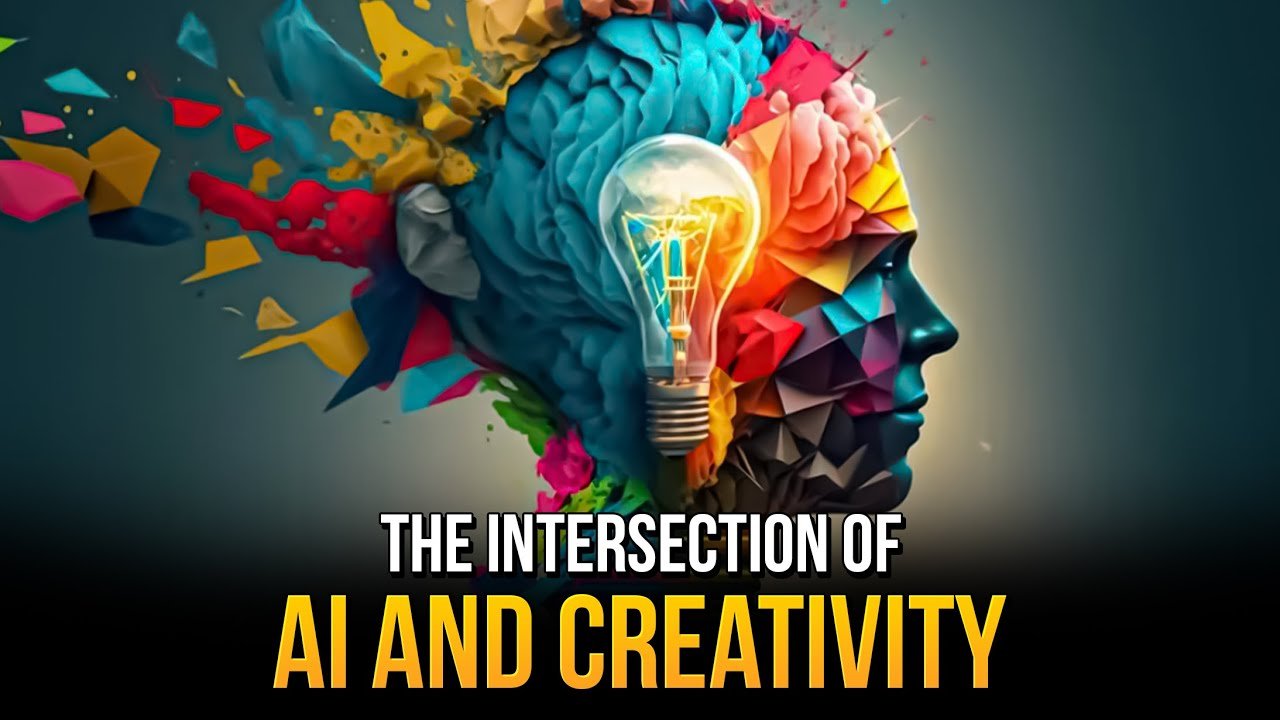
For more background, readers can explore our guide to AI and creativity.
3. AI Is Changing Creative Work in Graphic Design
Graphic design has also been affected by rapid improvements in AI technology.
Designers can now use AI-assisted software to explore visual concepts, create image variations, remove unwanted objects, extend images, generate backgrounds, and test different creative directions.
This can be useful during the early stages of:
- Logo development
- Social media design
- Advertising campaigns
- Website graphics
- Product concepts
- Presentations
- Marketing materials
The first generated result is rarely the final answer.
A professional designer may need to adjust composition, typography, proportions, colors, branding, and visual consistency. Human judgment remains essential because a technically impressive image can still be the wrong choice for a particular brand or audience.
Tools from companies such as Adobe are also adding AI-powered features to established creative workflows, giving designers ways to combine traditional editing with generative capabilities.
4. AI Speeds Up Video Production
Video production normally involves several separate tasks.
There is scripting, recording, editing, captioning, audio cleanup, scene selection, visual effects, and content formatting. Even a short video can require considerable preparation and post-production work.
AI can help with many of these steps.
Creators can use AI-assisted tools for transcription, subtitle generation, audio enhancement, background removal, editing suggestions, scene organization, and content repurposing.
A long video can also be divided into shorter clips for social media. One recording can therefore become several pieces of content instead of being used only once.
This is particularly useful for businesses, educators, YouTubers, marketers, and independent creators who need to publish content regularly.
Platforms such as YouTube have also become important parts of modern video publishing, where creators can distribute both long-form and short-form content to different audiences.
5. AI Supports Music and Audio Creation
The influence of AI is not limited to visual and written content.
Musicians and audio creators can experiment with AI-assisted tools to develop melodies, explore arrangements, clean recordings, generate sound effects, and find possible directions for a project.
This can be particularly helpful when someone has an idea but cannot decide what should come next.
There are also legal and ethical considerations.
AI-generated music can raise questions about copyright, ownership, originality, and the material used to train AI systems. Before using generated audio in a commercial project, creators should review the licensing conditions of the specific tool.
The technology can open new creative possibilities, but understanding how those possibilities can legally be used is part of the creative process too.
6. AI Personalizes Creative Content
Different audiences often respond to different messages.
A campaign designed for existing customers may not work the same way for people discovering a brand for the first time. Likewise, a message that works well in an email may need a completely different format on Instagram or YouTube.
AI can help creators develop multiple versions of the same core idea.
For example, a marketing team could adapt one campaign for:
- YouTube
- Websites
- Search advertisements
- Different customer groups
Instead of manually creating every version from the beginning, a team can use AI to produce initial variations and then edit them for accuracy, tone, branding, and audience expectations.
This makes personalization easier to test at scale.
7. AI Is Changing Creative Work by Helping With Creative Blocks
Creative blocks are part of the process.
A writer can become stuck halfway through an article. A designer can struggle to choose between two concepts. A filmmaker might know what a scene needs to accomplish but have no clear idea how to achieve it.
AI can provide a fresh starting point.
A creator can describe the problem and ask for alternative approaches, unusual combinations, questions, examples, or different perspectives. Some suggestions will be weak. That is fine.
The useful part may be the one suggestion that causes the creator to think differently.
The goal is not to let AI make every creative decision. It is to use AI as a source of possibilities that can push human thinking in a new direction.
8. AI Automates Repetitive Creative Tasks
Creative professionals spend plenty of time on tasks that are necessary but do not require much imagination.
These may include:
- Formatting documents
- Resizing images
- Creating captions
- Transcribing recordings
- Organizing files
- Removing image backgrounds
- Producing content variations
- Converting content into different formats
Automation can reduce the amount of manual work involved in these activities.
That gives creators more time for strategy, storytelling, research, experimentation, and quality control.
This is one of the clearest examples of AI is changing creative work in practical terms. The technology does not necessarily replace the creative person. It can remove some of the repetitive steps surrounding the creative process.
9. AI Makes Advanced Creative Tools More Accessible
Professional creative software has traditionally required time and practice.
Learning design, animation, video editing, coding, or audio production can take months or years. AI-assisted tools are lowering some of the technical barriers.
A beginner can describe an idea and generate an initial result without mastering every technical detail first.
That does not make professional skills irrelevant.
Experienced creators often get better results because they understand composition, storytelling, pacing, branding, editing, and quality control. They know what needs to change when an AI-generated result looks almost right but still feels wrong.
AI can therefore make creative tools more accessible while giving experienced professionals new ways to work.
10. AI Is Changing Creative Work by Creating New Forms of Creativity
Perhaps the most interesting development is not simply that AI makes existing tasks faster.
It can also connect different creative formats.
A writer could develop a story and use AI to explore visual concepts. A designer could turn those ideas into graphics or animation. A developer could then transform the experience into an interactive website.
Text, images, audio, video, and code can become parts of one connected workflow.
This changes the creative process itself.
Instead of using AI for one isolated task, creators can build workflows where several tools contribute at different stages. Small teams and individual creators can experiment with projects that once required much larger production teams.
The Human Role Still Matters
The growth of AI does not remove the need for human creativity.
AI can generate possibilities quickly, but humans decide whether those possibilities are useful, appropriate, meaningful, or worth developing.
Human creators bring:
- Context
- Taste
- Experience
- Emotion
- Original perspectives
- Cultural understanding
- Ethical judgment
- Brand knowledge
These qualities influence how an idea connects with real people.
Research and responsible use also matter. Organizations such as NIST provide guidance and resources around trustworthy artificial intelligence, which can help businesses think more carefully about how AI systems are introduced into their workflows.
The strongest approach is not about choosing between humans and technology. It is about giving each one the role they handle best.
The Future of Creative Work
The way people create content is changing quickly.
AI is changing creative work by making brainstorming easier, speeding up production, supporting personalization, and reducing repetitive tasks. At the same time, creators still need strong ideas and the ability to judge whether a piece of work actually deserves an audience.
Producing more content does not automatically mean producing better content.
The more useful question may be: What is worth creating?
As AI tools continue to develop, creators will need more than technical knowledge. They will need curiosity, communication skills, creative judgment, subject knowledge, and a clear understanding of the people they are trying to reach.
AI can help move an idea forward. Human thinking determines whether that idea is worth pursuing.
Final Thoughts
The future of creative work is not simply AI versus humans. It is increasingly about AI and humans working together.
AI can generate possibilities, automate repetitive production, assist with editing, and help creators explore ideas more quickly. Humans provide the vision, judgment, originality, context, and emotional connection.
That combination is what makes AI is changing creative work such an important shift.
Creators who learn to use AI thoughtfully can spend less time dealing with repetitive production and more time developing ideas, telling meaningful stories, experimenting with new formats, and creating work that people actually want to see.