


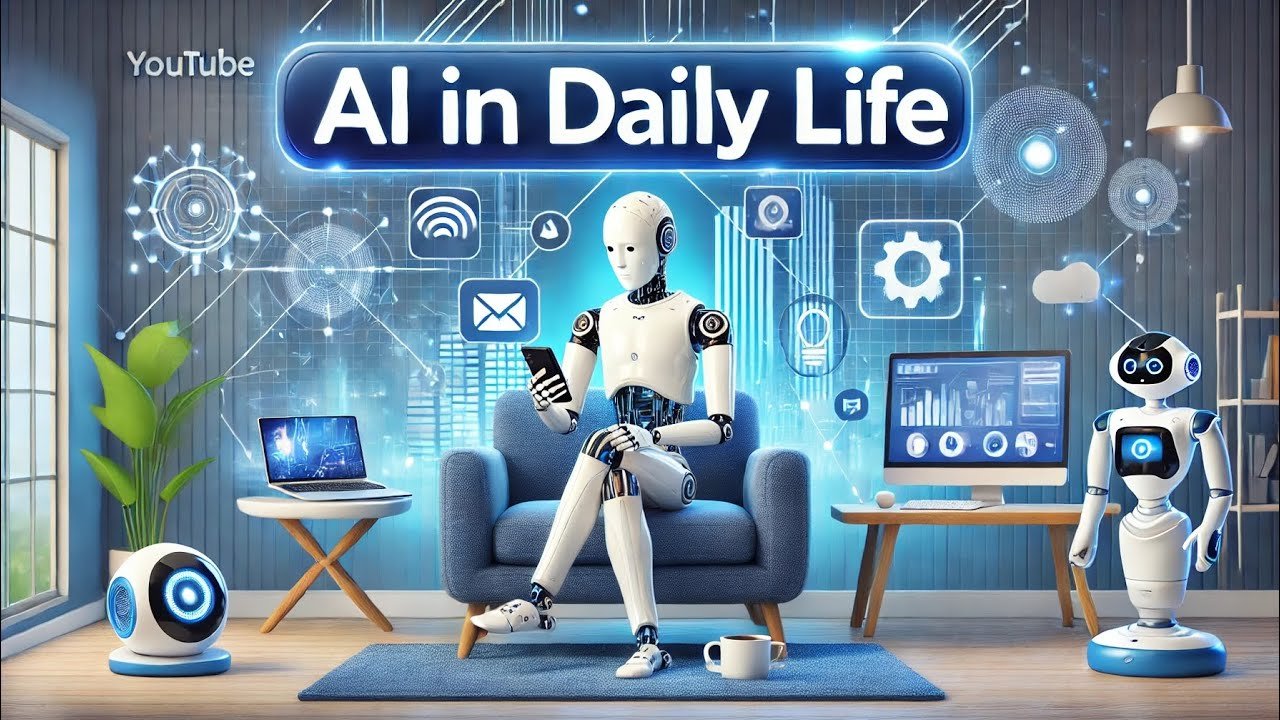
Everyday AI examples are much closer to us than most people realize. Your phone can improve a photo, your map can find a quicker route, your inbox can move suspicious emails into spam, and a streaming service can suggest something to watch before you even know what you want.
None of these experiences necessarily feels like “using artificial intelligence.”
You simply open an app and get something done.
That is part of what makes AI so interesting. It has become woven into ordinary digital tools, often quietly doing useful work without asking users to understand how the technology operates.
From smartphones and search engines to shopping websites and voice assistants, here are 10 ways you may already be using AI without realizing it.
1. Your Smartphone Camera Uses AI
Taking a photo looks simple. Point the phone, tap the screen, and you are done.
Modern smartphone cameras, however, can perform a surprising amount of processing before the final image reaches your gallery.
AI-powered software can recognize faces, objects, lighting conditions, scenes, and other details. The phone can then adjust the image automatically.
Common features include:
- Portrait effects
- Low-light enhancement
- Image stabilization
- Face detection
- Object recognition
- Automatic image enhancement
Take a picture in a dark room and your phone may brighten the image, reduce noise, sharpen details, and balance the exposure without you touching a single manual setting.
The experience feels simple because the complicated part happens in the background.
2. Your Phone Recognizes Your Face
Face recognition is another feature that has become so normal that many people barely notice it.
You pick up your phone, look at the screen, and it unlocks.
Behind that quick interaction, the device is comparing facial characteristics with the information used for authentication. The process is designed to happen quickly so you can access the phone without repeatedly entering a password or PIN.
This is a good example of how AI can disappear into a normal habit.
Years ago, facial recognition sounded futuristic. Today, for many smartphone users, it is simply one of those features that makes a device more convenient.
You enter an address into a navigation app and receive a suggested route within seconds.
Then something changes.
Traffic becomes heavier, an accident is reported, or another road starts moving faster. Suddenly the app recommends a different route.
Navigation systems can process information about traffic, road usage, travel patterns, estimated journey times, and changing road conditions. That information can be used to compare possible routes and estimate which one may get you to your destination sooner.
You might only see a short message:
“Faster route available.”
That small notification is backed by a system handling a large amount of information.
For regular drivers, it can mean fewer delays and a more predictable journey.
4. Streaming Services Recommend What You Watch
Ever opened a streaming platform and thought, “That actually looks good”?
The recommendation probably did not appear randomly.
Streaming services can analyze patterns in how people watch and interact with content. They may consider what you watched, how long you stayed, what you searched for, what you skipped, and which types of content you tend to return to.
Recommendations can be influenced by:
- What you watched
- How long you watched it
- What you searched for
- Genres you prefer
- Content you interacted with
- Similar viewing behavior
Over time, the service can create a more personalized selection.
It does not always get it right. Sometimes the recommendation is completely off.
But when it works, it saves you from scrolling through hundreds of choices looking for something interesting.
Your social media feed is usually more than a simple list of posts arranged by time.
Recommendation systems can decide which posts, videos, creators, and advertisements are more likely to catch your attention.
They may consider signals such as:
- Posts you interact with
- Accounts you follow
- Videos you watch
- Searches you make
- Content you skip
- Topics you regularly engage with
Imagine spending a few days watching cooking videos. Before long, your feed may contain more recipes, kitchen products, chefs, and food-related creators.
That is personalization at work.
There is a useful thing to remember here: your feed is shaped around your behavior. It is not necessarily a complete picture of everything being posted on the platform.
Two people can open the same application at the same time and see very different content.
6. Email Uses AI to Detect Spam
Most people do not want to spend part of every morning deleting unwanted emails.
Fortunately, email services can do much of that sorting automatically.
Spam detection systems can examine patterns in incoming messages and look for signs associated with suspicious or unwanted email.
They may consider:
- Sender information
- Message patterns
- Links
- Attachments
- Previous behavior
- Similarity to known spam
When a message looks suspicious, it may be moved to the spam folder before it ever reaches the main inbox.
That sounds like a small feature, but imagine having to inspect hundreds of unwanted messages yourself.
Some email services also use intelligent systems to organize messages, identify potentially important mail, and make crowded inboxes easier to manage.
7. Search Engines Understand What You Mean
Search engines have become much better at understanding normal questions.
You no longer need to type a strange combination of keywords just to get a useful result.
For example, you might search:
“How do I fix a phone that won’t charge?”
A modern search system can recognize that you are asking for troubleshooting advice. It is not simply matching the individual words.
The meaning of the question matters.
That is why conversational searches often work well. You can explain what you are trying to find in ordinary language instead of trying to predict exactly which keywords a search engine wants.
Among everyday AI examples, this is one of the easiest to overlook because searching online has become such a normal part of life.
8. Online Stores Recommend Products
Online shopping websites also use recommendation systems.
You have probably seen messages such as:
“You may also like…”
or:
“Customers also bought…”
Those suggestions can be based on product views, searches, previous purchases, browsing activity, and other interactions.
Suppose you spend a few minutes comparing headphones. Later, the site might show another pair, a carrying case, replacement accessories, or similar products.
The idea is to reduce the amount of searching required.
That can be helpful on websites with thousands of products, although shoppers should still compare specifications, prices, return policies, and reviews before making an expensive purchase.
A personalized recommendation is a starting point, not a guarantee that the product is the right choice.
9. Your Keyboard Predicts What You Will Type
The keyboard on your phone may look simple, but it is doing more than displaying letters.
Modern keyboards can predict the next word, correct spelling, suggest phrases, learn commonly used vocabulary, and convert speech into text.
Features may include:
- Autocomplete
- Next-word suggestions
- Spelling correction
- Grammar suggestions
- Personalized vocabulary
- Voice-to-text
You have probably seen the keyboard suggest a word before you finish typing it.
Sometimes the prediction is surprisingly accurate.
Sometimes it produces something completely ridiculous.
Even so, those small suggestions can save time when you are writing messages throughout the day. A few seconds saved on one sentence may not seem meaningful, but repeated hundreds of times, the convenience adds up.
This is another of the everyday AI examples that most people simply accept as part of using a smartphone.
10. Voice Assistants Understand Your Requests
You can ask a voice assistant to set an alarm, play music, check the weather, start a timer, or answer a question.
The request sounds simple.
The system has several things to do before it can respond.
It needs to:
- Recognize your speech.
- Convert the speech into usable information.
- Understand what you are asking.
- Decide what action or answer is appropriate.
- Provide the result.
All of this may happen within a few seconds.
The useful part for the user is that there is no need to learn a complicated command structure. You can speak naturally and let the system interpret the request.
That is another reason voice assistants have become part of everyday digital routines.
Everyday AI Examples We Often Don’t Notice
The strange thing about modern AI is that it rarely announces itself.
There is usually no large message saying, “Artificial intelligence is being used right now.”
Instead, you notice the result:
- A faster route
- A recommended video
- A corrected word
- A filtered email
- An improved photo
- A product suggestion
- A voice response
The technology is hidden inside the feature.
That is why people can interact with AI many times in a single day without deliberately opening an AI application.
AI Is Becoming an Invisible Assistant
AI used to feel like a separate category of technology.
Now it is increasingly part of things people already use.
Your smartphone can rely on it. Search engines use it. Email services can use it. Social media platforms, online stores, streaming services, and navigation tools can also use AI-powered systems.
You are not necessarily asking AI to do something directly.
Instead, AI may be helping the existing software perform its job.
That difference matters.
The technology is becoming less like a special product and more like an underlying layer inside everyday digital services.
Why Everyday AI Examples Matter
Looking at everyday AI examples can make the technology feel less mysterious.
You do not have to understand every technical detail to recognize where AI is being used.
A recommendation tells you what to watch. A map helps choose a route. A keyboard predicts your next word. A spam filter removes messages you do not want.
These are small interactions, but together they show how deeply AI has entered ordinary digital life.
Should You Be Concerned About Everyday AI?
There are plenty of benefits to having intelligent systems handle routine jobs, but convenience does not mean you should ignore how the technology works.
Many personalized services depend on user information. Depending on the product, that could include searches, browsing behavior, location data, purchases, viewing activity, or account interactions.
Take a few minutes to look at privacy settings and permissions on services you use regularly.
Accuracy is another consideration.
AI can make mistakes. A recommendation can be irrelevant. A system can misunderstand a request. An automated answer can sound convincing and still contain incorrect information.
For everyday entertainment, a minor error may not matter much.
For decisions involving money, privacy, security, safety, or important personal information, it is better to check the details yourself.
The National Institute of Standards and Technology provides resources on artificial intelligence and trustworthy AI practices for readers who want to learn more about responsible use.
The Future of AI in Daily Life
The next stage of AI may not look dramatic at all.
Instead of suddenly replacing familiar software, AI is likely to become more closely integrated with it.
Your calendar may help organize your day. A translation tool may work inside a conversation. A shopping application may narrow down products for you. A learning platform may adjust explanations based on what you already understand.
The technology may actually become harder to notice.
People may stop saying, “This feature uses AI.”
They will simply expect their software to understand what they need.
That is probably how many everyday technologies become normal. First they feel new. Then they become convenient. Eventually, people stop thinking about them at all.
Final Thoughts
You probably use artificial intelligence more often than you realize.
It may improve a photo, suggest a faster route, filter an email, recommend a movie, predict the next word in a message, suggest a product, or respond to a voice command.
These everyday AI examples show that artificial intelligence is not limited to futuristic machines or specialist software. It is already built into many of the digital tools people use every day.
Knowing where AI appears can help you understand the technology a little better. It can also make you more aware of personalization, privacy, automated recommendations, and the decisions software makes in the background.
AI does not always announce itself.
Quite often, it just makes something work a little more smoothly.